
England’s Dominance Amidst Rain Interruptions
The first Rothesay Test between England and New Zealand at Lord’s has extended into a fourth day, with England in a strong position despite significant rain interruptions. Only five sessions of play were possible over the first three days, yet England has consistently maintained an advantage, taking a wicket approximately every four overs. The weather forecast for day four is more optimistic, anticipating dry conditions.
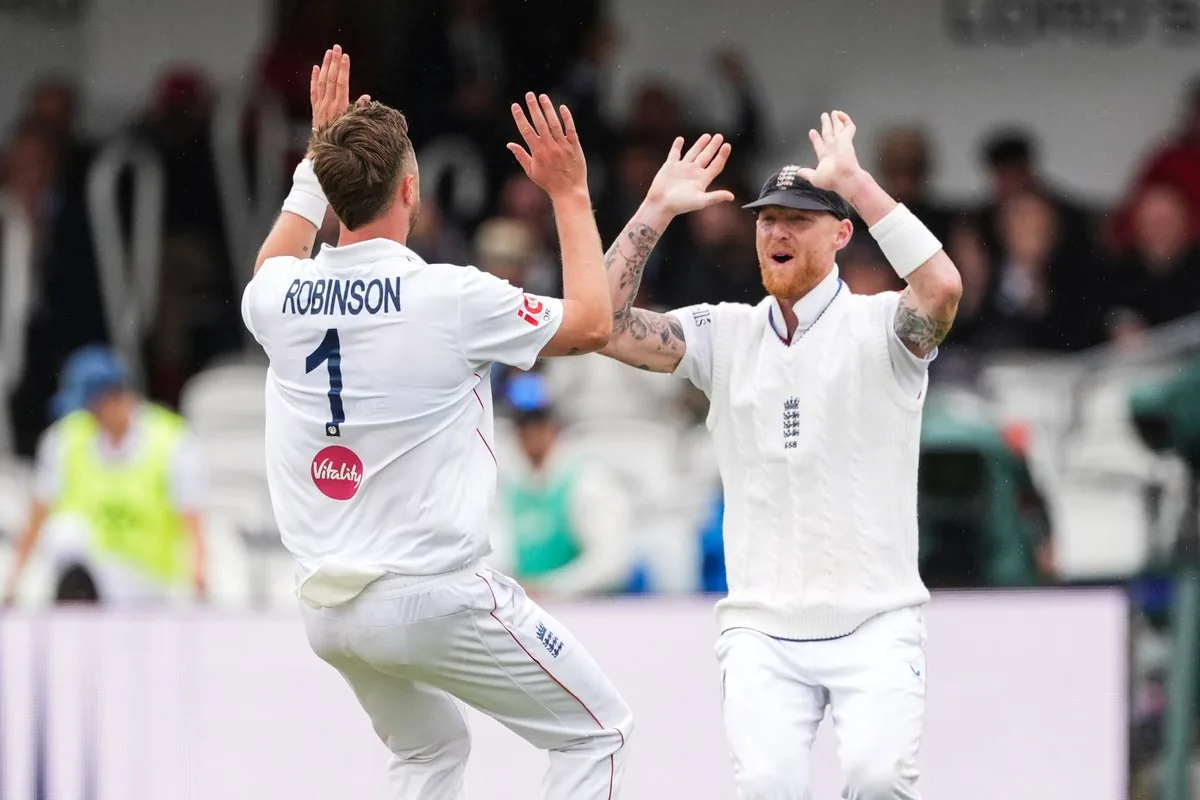
Ollie Robinson has been a key performer for England, tightening their grip on the match. He has taken seven wickets for 57 runs in the match so far. His performance on day three, where he secured two wickets in four balls, was particularly impactful. Robinson‘s career-best figures of five for 39 in the first innings set the tone for his memorable reintroduction to the Test team, having waited over two years for his 21st cap.
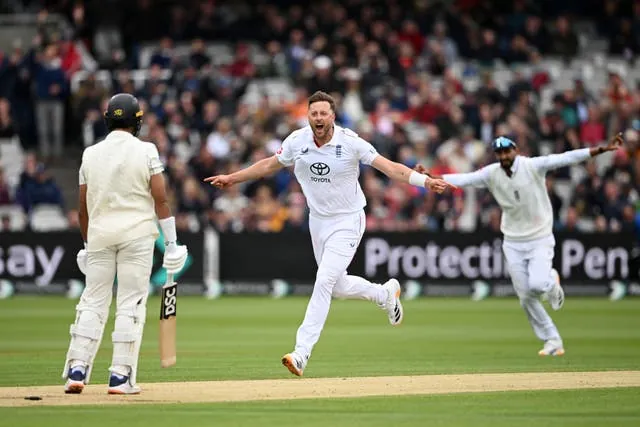
The pitch at Lord’s has been described as dry, uneven, and has attracted criticism for its challenging nature for batters. Despite this, England‘s bowlers have capitalised on the conditions. Robinson, for instance, has a wicket every 47 balls, making him England‘s best bowler by Test strike rate since the first world war, among those with a minimum of 80 wickets. Other notable bowling performances include Gus Atkinson with four for 25 and Josh Tongue with four for 55.
Key Wickets and Batting Challenges
On day three, Robinson dismissed Rachin Ravindra for four and trapped Daryl Mitchell leg before wicket, further solidifying England‘s control. These dismissals left the Black Caps at 55 for five, chasing a target of 254 runs. The decision to bring wicketkeeper Jamie Smith up to the stumps was noted as a factor in anchoring Mitchell to his crease, contributing to his dismissal.
The challenging pitch conditions have resulted in 21 single-figure scores, eight ducks, and 11 clean-bowled dismissals among the 35 wickets that have fallen. The highest total of the match remains a distant prospect given the irregular bounce and significant seam movement still on offer. New Zealand‘s batters have found it difficult to establish partnerships and build substantial innings.
Josh Tongue also made a crucial breakthrough on day four, dismissing Tom Blundell for four, caught leg before wicket. Tongue‘s ability to nip the ball back down the slope proved effective. He revealed that a ‘smiley face’ at his mark helps him stay positive during play, though he has not needed it much in this match due to his success.
New Zealand’s Remaining Hopes
Despite the precarious position, New Zealand still has some batting remaining. Devon Conway, who scored a double century on his Test debut at Lord’s five years ago, remains at the crease. Although his scores at this venue since then have been modest (23, 3, 13, 1, and 19*), his past performance suggests he is capable of a significant innings. Conway is currently on 20 runs.
The team also has Glenn Phillips and Kyle Jamieson, who were responsible for the majority of runs in New Zealand‘s first innings, yet to bat. Phillips, who started his innings purposefully with a clip for a single, has shown a more aggressive approach, finding the boundary early in his stay. He has already made more runs than Latham, O’Rourke, Ravindra, and Mitchell combined in his brief time at the crease.
New Zealand needs 199 more runs to win, with five wickets in hand. The play resumed at 11am BST on day four.
Source: theguardian.com

As NewsGB.org's Sports News Writer, Theo Marsden reports on rugby union, golf and boxing for readers across the country. He began on a regional sports desk in Yorkshire. He holds a degree in Journalism from the University of Hull and completed an NCTJ diploma. Theo lives in Hull, where he follows the European Tour and amateur rugby. “Sport moves fast; readers deserve it right the first time.”