
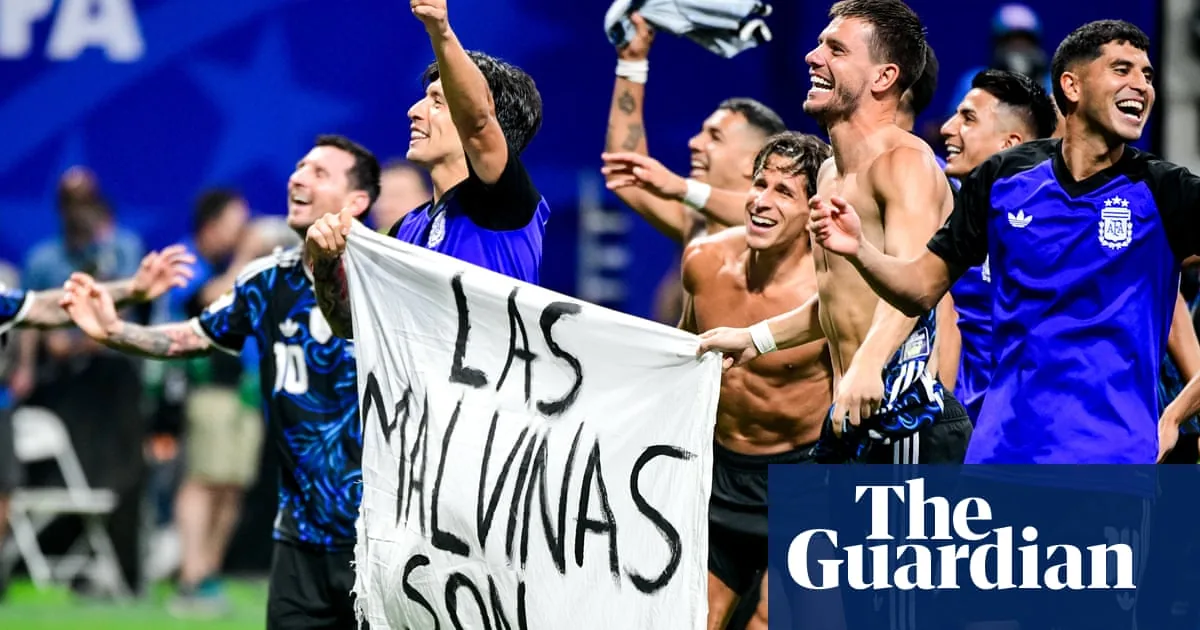

Argentina’s World Cup Semi-Final Victory and Banner Display
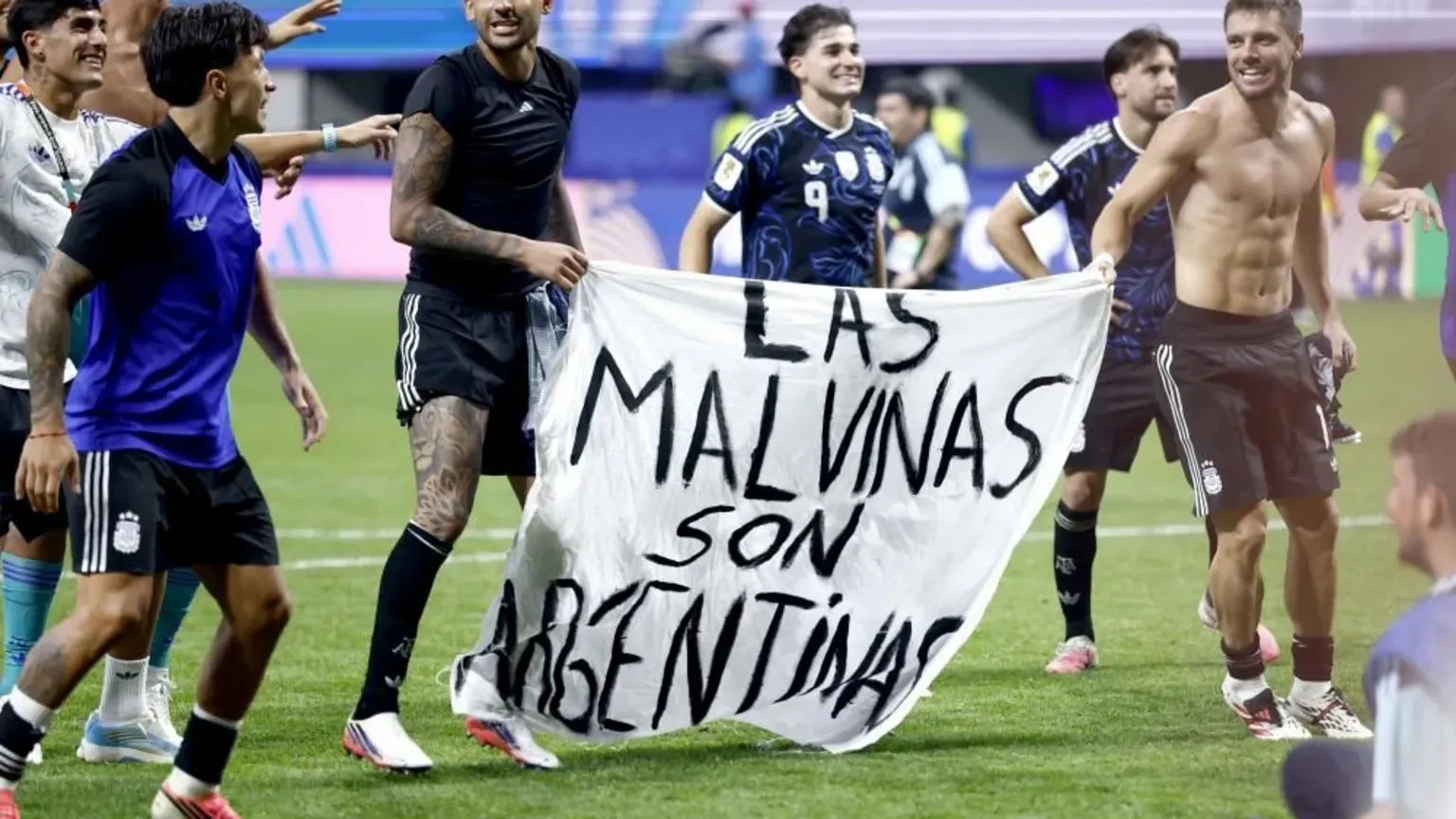
Argentina players displayed a banner referencing the Falkland Islands following their World Cup semi-final victory against England. The banner, which read “Las Malvinas son Argentinas,” translates to “The Falklands are Argentine.” This action occurred after Argentina secured a 2-1 win against Thomas Tuchel’s side in Atlanta, advancing them to the final against Spain.
The Falkland Islands are a British overseas territory, and their sovereignty remains a point of contention between the UK and Argentina. In 1982, Argentina invaded the islands, leading to a 74-day conflict. A referendum held in 2013 saw the islanders vote overwhelmingly to remain a UK overseas territory.
Fifa’s Response and Previous Incidents
Fifa is currently “assessing match reports” to determine if any disciplinary action will be taken. A spokesperson for Fifa stated that their independent disciplinary committee is reviewing the circumstances and will decide on potential steps based on the Fifa disciplinary code. This is not the first time Argentina’s football association has faced scrutiny for similar actions; in 2014, they were fined for displaying a banner with the same message before a friendly match.
The world football governing body had previously stated that such gestures breached rules concerning political action and team misconduct. The UK government has supported calls for Fifa to investigate, with the prime minister’s official spokesperson asserting the UK’s commitment to the Falkland Islands.
There are precedents for Fifa taking disciplinary action for political messages. For instance, after the 2012 Olympic Games bronze medal match, South Korea midfielder Park Jong-woo received a two-match suspension for holding a sign that read “Dokdo is our territory,” referring to a disputed group of inlets.
Reactions and Calls for Investigation
The government of the Falkland Islands expressed disappointment regarding the banner, hoping that Fifa would “sanction all behaviour of this nature in line with its own rules.” They also emphasized their desire to keep politics separate from sport. Argentina’s President Javier Milei reportedly called the players’ action “understandable” and “valid,” though he clarified that “the things that happen on the pitch are not part of diplomacy.”
Peter Kyle, the business and trade secretary, stressed the importance of keeping politics out of the World Cup and urged Fifa to investigate. Kemi Badenoch, leader of the Conservative Party, echoed these sentiments, stating that Fifa “absolutely should investigate.” Liberal Democrat leader Ed Davey called for the Argentina players involved to be suspended for Sunday’s final against Spain, drawing a parallel to Uefa’s ban of Spain players Alvaro Morata and Rodri for chanting “Gibraltar is Spanish” during Euro 2024 celebrations.
Argentina midfielder Leandro Paredes commented after the match that the Falklands War was a “sad part of our history” and that the game “wasn’t just a football match” for his nation. However, before the semi-final, Argentina manager Lionel Scaloni had stated he was “not going to mix” football and politics, acknowledging the historical significance but emphasizing it was a football match.
The Falkland Islands government reiterated its disappointment, stating that the banner was “particularly insensitive for many people in the Falklands.” They hope Fifa will uphold its commitment to keeping politics out of sport and apply sanctions in accordance with its regulations.
The Fifa disciplinary committee is currently assessing the match reports and relevant circumstances before making a decision on further steps.
Read Also
- Argentina could face disciplinary action after displaying Falklands banner following England match
- England manager Thomas Tuchel to remain until Euro 2028 despite World Cup semi-final loss
- London police rescue Argentina fan from large crowd in Piccadilly Circus
- England manager Tuchel retains FA backing despite World Cup semi-final defeat
Source: bbc.co.uk

Niamh Pendlebury is the Sports Reporter at NewsGB.org, covering tennis, cricket and athletics with seven years of reporting experience. She reported on Team GB and the county circuit. She holds a degree in Sport and Media from the University of Central Lancashire and completed an NCTJ diploma. Based in Preston, she plays club tennis and follows road running. “The best interviews come from patience, not pressure.”