
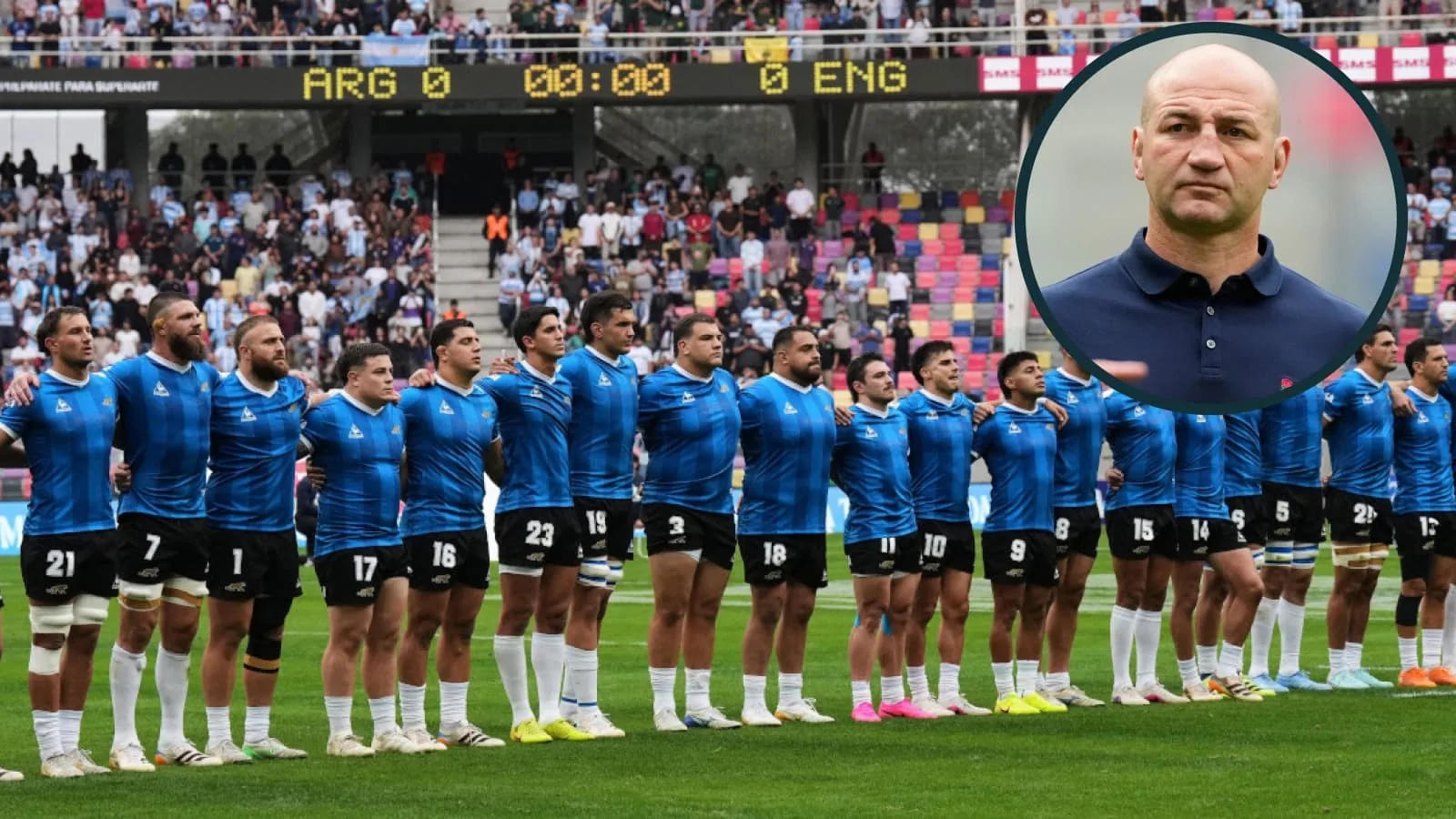

England secured a 31-24 victory over Argentina in Santiago del Estero, concluding their summer fixtures on a positive note. The match, part of the Nations Championship 2026, was marked by significant disciplinary issues for both sides, including seven yellow cards and a disallowed try in the final moments.
The win moves England to third place in the Northern Hemisphere standings, following consecutive bonus point victories. This result builds on their previous 73-8 win against Fiji, which had ended a series of five defeats. Argentina currently holds fourth place in the Southern Hemisphere standings.
Discipline Concerns for England
Despite the victory, England’s discipline has drawn criticism, with former scrum-half Matt Dawson describing it as “verging on comical.” England received four yellow cards in the second half alone, leading to them playing with 13 players on two occasions. The instances included:
- Jack van Poortvliet for a deliberate knock-on at 51 minutes.
- Alex Coles for a deliberate knock-on at 55 minutes, resulting in a penalty try for Argentina.
- Henry Pollock for offside at 74 minutes, following multiple infringements.
- Emmanuel Iyogun for offside at 77 minutes, described as “cynical” by the referee.
Argentina also faced disciplinary action, with three players receiving yellow cards. This pattern of ill-discipline is not new for England, who have accumulated 14 yellow cards and one red card across eight matches in 2026. Only once in this period, against Fiji, did they avoid a sin-binning. This issue was a contributing factor to their four-match losing streak and a fifth-place finish in the Six Nations, which brought head coach Steve Borthwick’s position under scrutiny.
Chris Ashton, a former England wing, suggested that opposing teams might exploit England’s tendency to concede penalties and make errors. Immanuel Feyi-Waboso, who was named man of the match and scored England’s fifth try, acknowledged the problem, stating, “Discipline is a huge thing. I don’t know how many cards there were but too many. We can’t be having games where we finish with 13 [players].”

Match Highlights and Controversial Ending
The match itself was a high-scoring affair with eight tries in total. England managed to score five tries despite having only 37 percent possession. The game saw a mass brawl early on and a finale that extended the last five minutes of play to 26 minutes in real time. A significant moment occurred in the 83rd minute when Argentina’s Bautista Delguy had a try disallowed. The television match official ruled that Henry Slade’s tackle forced Delguy into touch before the ball was grounded, denying Argentina a chance to level the score.
Borthwick defended his team’s performance, highlighting their “incredible spirit” and the “fight that’s in this group of players.” He specifically praised Henry Slade’s late tackle as “incredible.” However, Argentina’s head coach, Felipe Contepomi, expressed frustration, accusing England of a “lack of respect” due to noise from their changing room after the match.
During a period when England was reduced to 13 players, with Van Poortvliet and Coles in the sin-bin and Fin Smith undergoing a head injury assessment, Marcus Smith temporarily played at scrum-half. Despite the numerical disadvantage, England’s set-piece held firm, notably with Ollie Chessum stealing a crucial lineout. The team’s resilience was further demonstrated when Van Poortvliet returned from the sin-bin to provide the pass for Marcus Smith’s try.
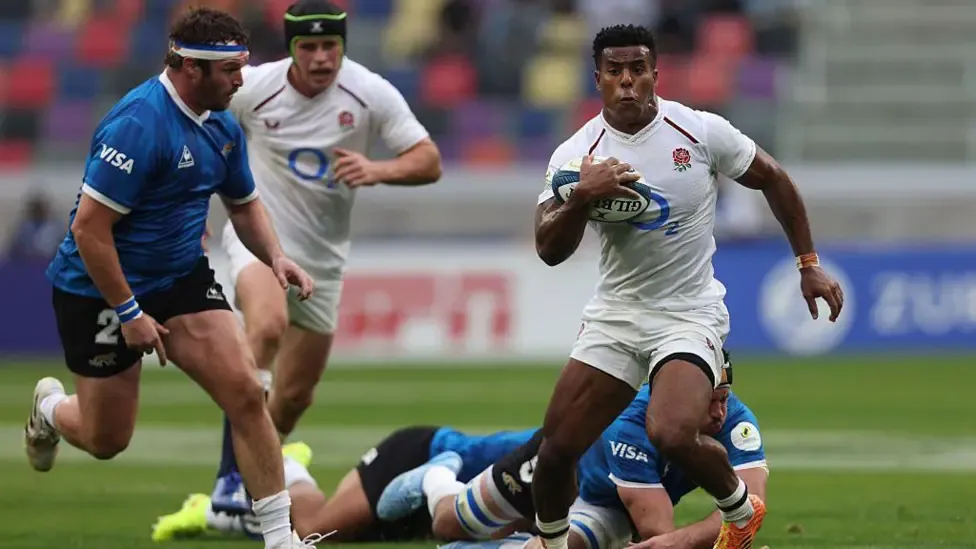
Immanuel Feyi-Waboso’s performance was a standout, contributing significantly with over a hundred metres gained and four clean line breaks. He created Ben Earl’s first try and sealed the match with a 30-metre run and finish. The strategic play of passing before contact and keeping the ball alive at the line was a notable evolution in England’s attack, moving away from the more lateral, contact-first approach seen in the Six Nations.
Looking Ahead
The match showcased a “tale of two halves” for the fly-halves, with Fin Smith dominating the first half, setting up Tommy Freeman’s early try. Tomás Albornoz, for Argentina, took control in the second half, creating Argentina’s first try and maintaining a perfect kicking record throughout the championship. Despite Albornoz’s strong individual performance, Smith’s orchestration of a cohesive team ultimately secured the win for England.
Argentina’s performance was described as having “self-inflicted wounds,” with errors such as kicking dead from restarts and multiple infringements leading to penalties. The team’s attack was often narrow and slow, allowing England’s defence to be effective. The final moments of the game, including the disallowed try and the extended playing time, contributed to a dramatic conclusion in Santiago del Estero.

Read Also
Source: bbc.co.uk

Niamh Pendlebury is the Sports Reporter at NewsGB.org, covering tennis, cricket and athletics with seven years of reporting experience. She reported on Team GB and the county circuit. She holds a degree in Sport and Media from the University of Central Lancashire and completed an NCTJ diploma. Based in Preston, she plays club tennis and follows road running. “The best interviews come from patience, not pressure.”