
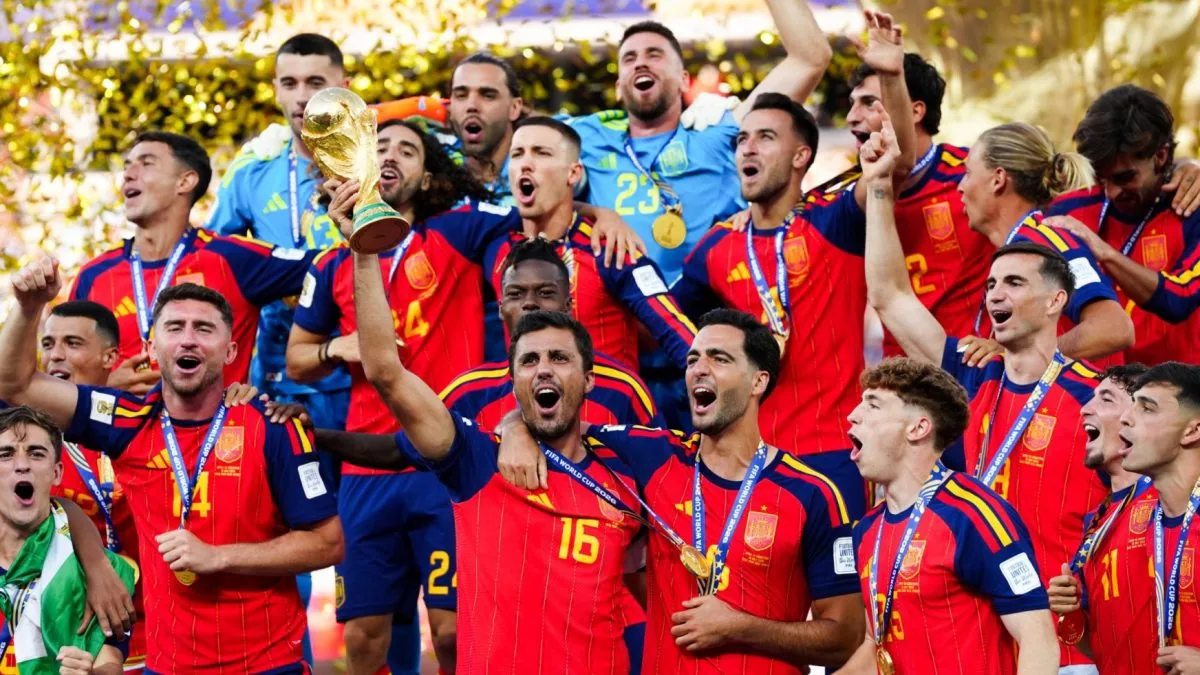

Madrid embraces World Cup triumph
Madrid residents gathered across the city to celebrate Spain’s World Cup victory, despite warm temperatures and the prospect of an early start to the work week. Fans filled various public spaces, including bars, parks, fairgrounds, and bullrings, to watch the final match. Many adorned the streets with red and yellow flags, reflecting the national colours.
In the capital, a significant number of supporters congregated at a large screen situated by the Manzanares river. The Movistar Arena, with its substantial capacity, also hosted fans. However, the Plaza de Colón appeared to be a central gathering point, where spectators watched the game beneath the statue of Christopher Columbus. The square is home to a large Spanish flag, measuring 21m by 14m and weighing 35kg, which was prominently displayed against the July sky.
The match, which saw Spain face Argentina, carried a particular significance due to the historical ties between the two nations. The Argentinian ambassador in Madrid acknowledged this shared history in a video message, encouraging both pride and composure from supporters. Wenceslao Bunge described the final as a “dream,” highlighting the commonalities between the “brother countries” and suggesting the event could serve as an example for values like work, perseverance, and respect.
A hard-fought victory
The final was described as a challenging spectacle, particularly due to Argentina’s defensive approach. The match was noted for its slow pace, which, combined with the lingering heat and other distractions, initially led to a sense of anticipation mixed with boredom among the crowd. This atmosphere shifted dramatically when Nico Williams scored a goal, though it was subsequently disallowed.
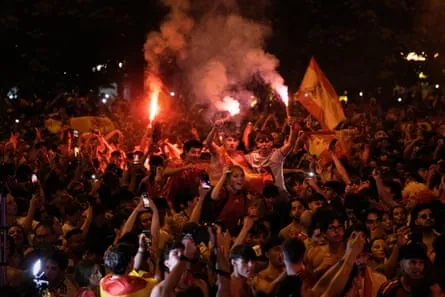
The initial roar of excitement following Williams’s goal gave way to disappointment. However, the crowd was re-energised approximately 17 minutes later when Ferran Torres scored, eliciting a thunderous response. This goal sparked widespread celebration, with screams, smiles, and flares erupting among the fans. Although another goal for Spain was reportedly disallowed, La Roja’s momentum became undeniable.
The match concluded with Spain securing a 1-0 victory in extra time, with Torres scoring in the 106th minute. The final whistle, which sounded shortly after midnight, was met with widespread delight in the Plaza de Colón, where fans, police, and ambulance workers celebrated together. Tears and embraces were common among the jubilant crowd.
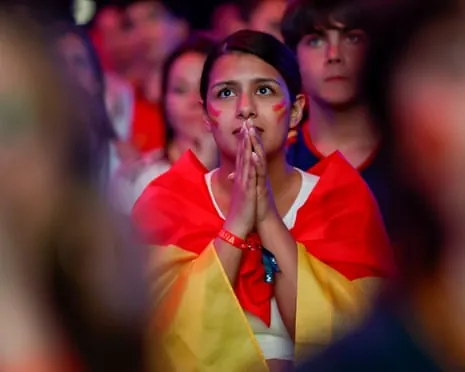
The victory marks a significant achievement for Spain, who last won the World Cup 16 years prior, following Andrés Iniesta’s goal against the Netherlands. Argentina, who had lifted the trophy in 2022, were aiming for a fourth title. The match was held at MetLife Stadium, and the outcome has been seen by some as a triumph for a system-based approach to football over individual brilliance.
Contrasting styles on display
The final showcased a stark contrast in playing styles. Spain, known for their possession-based football, aimed to reinforce their positional dominance throughout the game. This was evident in their substitutions, which included bringing on players like Pedri and Ferran Torres to bolster their midfield presence.
Argentina, on the other hand, adopted a more disruptive strategy. Their approach was characterised by a focus on preventing Spain from playing their natural game, often resulting in numerous fouls. This led to Argentina accumulating more red cards than shots on target during the 98 minutes of normal time. One notable instance involved Enzo Fernandez receiving a red card for a challenge.
The contrasting styles led to a match that, while not always entertaining, was a significant contest. The outcome has been interpreted as a victory for “good sport” given Argentina’s behaviour during the tournament. Spain’s win is also seen as an extraordinary triumph for their established football system, marking their second major international title in two decades. They are currently European champions in men’s football and world champions in both men’s and women’s football.
For Katy, an 18-year-old from Madrid who was two years old during Spain’s last World Cup win, the moment was described as “historic” and “exciting.” Miguel Hinojal Vicente, 37, who travelled from Toledo for the event, recalled vivid memories of the previous victory, though he admitted to being more of an Atlético Madrid fan. His friend, Raquel García, expressed greater enthusiasm, viewing the event as a symbol of national hope and unity, bringing people together and fostering happiness.
The celebrations in Madrid continued into the night, with fans expressing their joy and relief after a tense match. The victory solidified Spain’s position as a dominant force in international football, adding another major trophy to their collection.
Read Also
- England secure third place at World Cup 2026 after 6-4 victory over France
- New York-New Jersey Stadium to host Spain versus Argentina World Cup final
- Golden Boot race intensifies as Mbappe leads Messi ahead of World Cup final
- Tour de France: Evenepoel criticises 'inhuman' overnight doping tests after stage 15 win
Source: theguardian.com

Harry Loxley is a Senior Football Correspondent at NewsGB.org. He spent his early career reporting East Midlands football. He focuses on the Premier League, the EFL and the England national side and is known for clear, deadline-driven reporting. He holds a degree in Sports Journalism from the University of Derby and completed an NCTJ diploma. Now based in Derby, he watches non-league and runs a fan podcast. “Good football writing follows the people, not just the points.”