

The upcoming World Cup final in the New York and New Jersey metropolitan area is under scrutiny due to dense wildfire smoke originating from Canada. This smoke has led to air quality alerts across various parts of the United States, prompting concerns for the event scheduled for Sunday.
On Thursday, the air quality in western regions of New York was deemed “very unhealthy,” while the New York City metro area experienced “unhealthy” conditions. This thick haze significantly obscured landmarks such as MetLife Stadium, the Empire State Building, and the Statue of Liberty. Many residents in the city were observed wearing masks outdoors to protect themselves from the air pollution.
Impact on teams and preparations
Spain conducted an outdoor practice session on Thursday in northern New Jersey despite hazardous air conditions. Media were permitted to observe the initial 15 minutes of what was planned as an hour-long session. Experts raised concerns about high-level athletes training outdoors under such circumstances, suggesting indoor facilities would be a safer alternative.
Dr. Courtney Howard, an emergency room physician and official with the Global Climate and Health Alliance, highlighted the risks, stating that athletes should avoid outdoor practice when air quality levels are hazardous due to wildfire smoke. She recommended using air-conditioned indoor facilities as clean-air shelters. Similarly, Mary Johnson, an environmental health research scientist at Harvard School of Public Health, noted that even healthy individuals could experience health effects from exercising in such an environment due to increased pollutant exposure.
Meanwhile, Argentina remained in the Atlanta area for their training, a location far enough south to avoid the direct impact of the smoke, which is being carried southeast from northern Ontario. The smoke has triggered warnings from the US Midwest through the Northeast.
Air quality outlook and tournament status
The air quality in East Hanover on Thursday initially registered as “unhealthy” but improved to “unhealthy for sensitive groups” by mid-afternoon, according to the U.S. Environmental Protection Agency’s Air Now monitoring system. Particle pollution in New Jersey on Thursday was reported to be more than seven times higher than the World Health Organization standard. Forecasts indicate an improvement to “moderate” air quality by Sunday, the day of the final.
FIFA confirmed on Friday that the negative air quality from the wildfires did not currently pose a threat to the World Cup final. Earlier in the day, tournament organisers stated they were closely monitoring the situation. Andrew Giuliani, Executive Director of the White House World Cup task force, mentioned ongoing discussions and collaboration with the National Weather Service.
Meteorologist Peter Mullinax from the National Weather Service suggested that while winds over the Great Lakes could push more smoke into the northeastern US, forecasts for that region anticipate some improvement. However, Joel Dreessen, an air quality forecaster for the state of Maryland, noted that future smoke levels for the final could depend on whether weekend storm systems cause more smoke to drift south.
Other matches in the tournament have faced weather-related issues, though not due to wildfire smoke. Mexico‘s knockout match against England was confirmed to proceed as scheduled despite earlier rescheduling rumours due to inclement weather. Additionally, Mexico‘s round-of-32 match against Ecuador was delayed by an hour due to stormy conditions. Concerns about extreme heat in July also prompted warnings regarding potential heat safety issues for some knockout matches.
The wildfires continue to burn in Canada, with over 200 fires out of control, particularly in Ontario. Nearly 2.8 million hectares have burned since the start of the year, a significant increase from the 1.6 million hectares reported as of last Friday. Advocates and scientists, including Paul Mathewson from Clean Wisconsin and Mark Parrington from the Copernicus Atmosphere Monitoring Service, have linked the increasing frequency and intensity of wildfires to climate change, citing higher surface air temperatures and lower soil moisture as contributing factors.

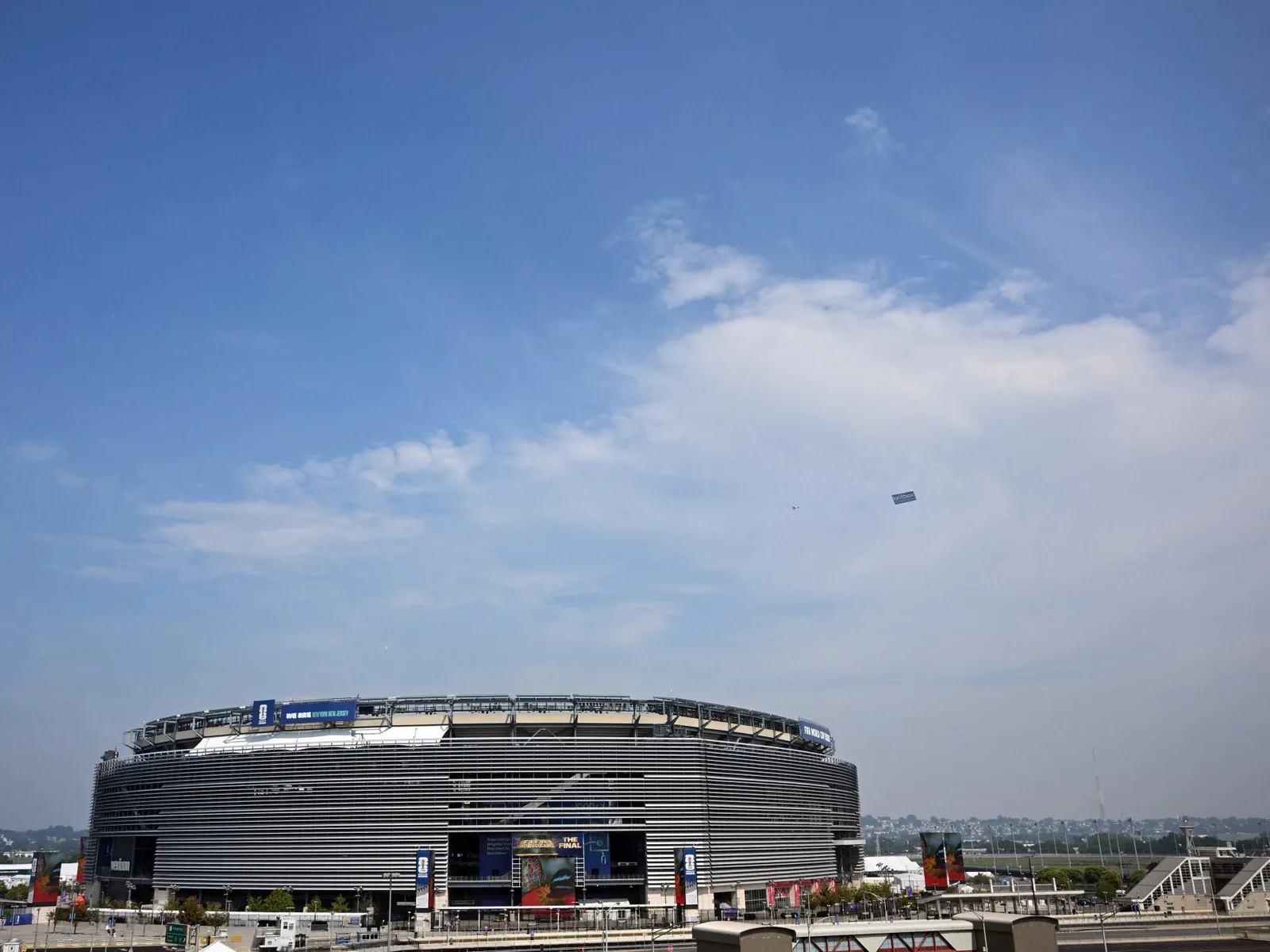
The New York/New Jersey Stadium is pictured two days before the FIFA World Cup 2026 final between Spain and Argentina in East Rutherford.

Spain‘s Rodri speaks during a news conference ahead of the World Cup final soccer match between Spain and Argentina in New York, Friday, July 17, 2026.
Read Also
- Argentina 'shocked' by Thomas Tuchel's substitutions in World Cup semi-final
- England's Harry Kane reflects on World Cup semi-final exit
- Arsenal expected to approach Aston Villa for Morgan Rogers, other transfer interests noted
- Royal Birkdale: Rory McIlroy relies on driver despite putting struggles at The Open
Source: aljazeera.com

Niamh Pendlebury is the Sports Reporter at NewsGB.org, covering tennis, cricket and athletics with seven years of reporting experience. She reported on Team GB and the county circuit. She holds a degree in Sport and Media from the University of Central Lancashire and completed an NCTJ diploma. Based in Preston, she plays club tennis and follows road running. “The best interviews come from patience, not pressure.”