
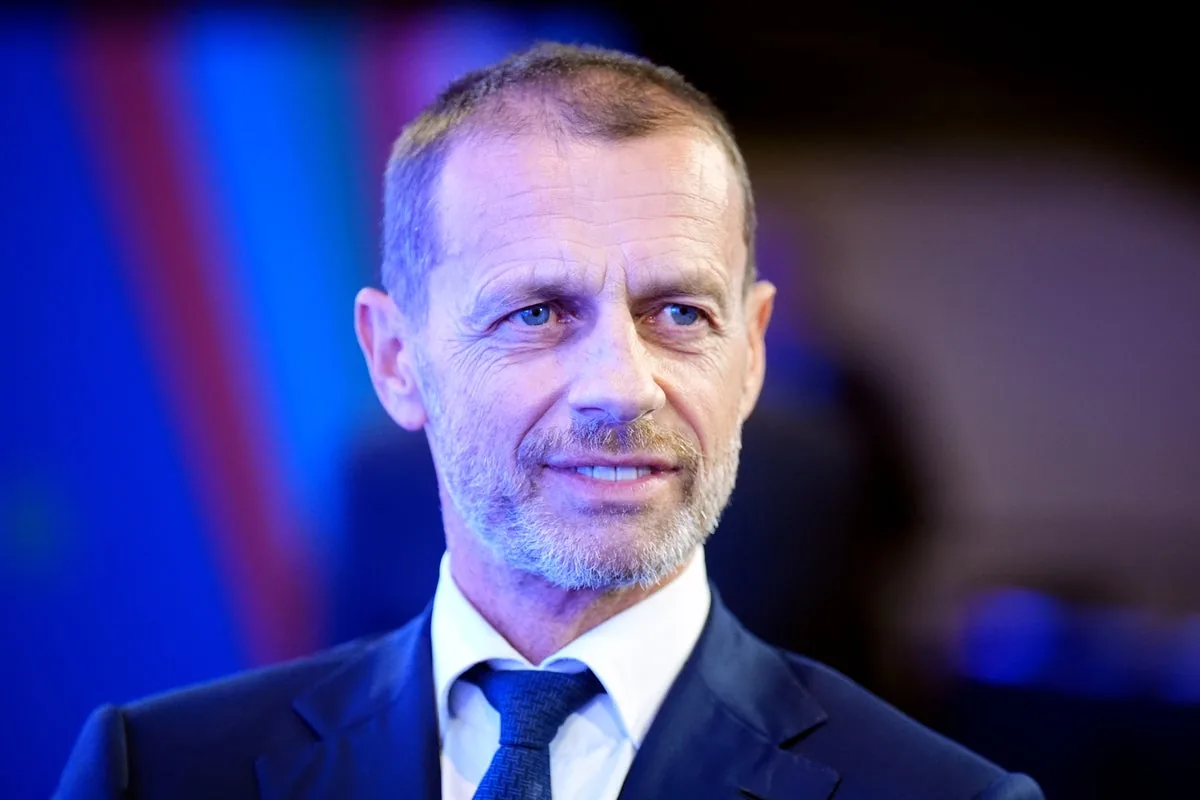

Uefa president Aleksander Ceferin did not attend the World Cup final in New Jersey, a decision understood to be a protest against Fifa. This boycott follows a series of disagreements between Uefa and world football’s governing body, with the handling of the Folarin Balogun affair cited as a significant point of contention.
Ceferin had previously travelled to Mexico City for the opening match of the tournament, which featured the co-hosts and South Africa. However, he opted out of attending the final, marking a clear stance against several of Fifa’s recent decisions and policies.
Disputes over disciplinary actions and rules
A key factor in Ceferin’s protest was Fifa’s disciplinary committee’s decision to suspend a one-match ban for United States striker Folarin Balogun. This suspension reportedly followed an intervention from US President Donald Trump to Fifa president Gianni Infantino, requesting a review of Balogun’s red card. Uefa publicly criticised this move, labelling it as “unprecedented, incomprehensible and unjustifiable” and stating that it had “crossed a red line”.
Uefa issued a statement highlighting concerns about the integrity of the game when the certainty of rules is compromised. The organisation suggested that such actions undermine the credibility of competitions.
Another point of contention involves the treatment of referee Omar Artan. After the Somali official was denied entry to the US before the tournament began, Uefa invited him to officiate the Super Cup between Paris St-Germain and Aston Villa on 12 August.
Broader policy disagreements
Ceferin has also expressed strong opposition to several other changes championed by Infantino. These include the introduction of extended half-time shows, which saw performances from artists such as Madonna, BTS, Shakira, and Justin Bieber, stretching the usual 15-minute break to 27 minutes 22 seconds. Uefa has confirmed that these extended half-time shows will not be adopted in the Champions League or the European Championship.
Furthermore, Uefa is against the prospect of a 64-team World Cup, an idea that Infantino appeared to entertain during the tournament. The organisation also disagrees with Fifa’s interpretation of the ‘mistaken identity’ VAR protocol, which led to Switzerland striker Breel Embolo being sent off in a quarter-final match against Argentina. Uefa has instructed its VARs not to apply this protocol for diving incidents.
The issue of players covering their mouths during confrontations has also drawn different responses from the two bodies. While Fifa introduced a rule leading to red cards for such actions, Uefa will not implement this in its competitions. This rule, proposed by Infantino to have a “deterrent effect”, saw Paraguay’s Miguel Almiron and Ecuador’s Piero Hincapie receive red cards during the World Cup.
Ticket pricing and team treatment
Ticket prices for the World Cup have also been a source of controversy within Uefa. Ceferin has been critical of Fifa’s pricing strategy, especially when compared to Uefa’s approach for Euro 2028, where a significant portion of tickets will be in affordable categories. Uefa noted that supporters could purchase five tickets for Euro 2028 for the price of a single parking space at a World Cup stadium in the United States this summer.
Concerns were also raised regarding the equitable treatment of all participating nations, particularly Iran, which faced strict entry and exit conditions in the US. The coach of Iran, Amir Ghalenoei, described his team as the “most oppressed” at the tournament.
Read Also
Source: bbc.co.uk

Harry Loxley is a Senior Football Correspondent at NewsGB.org. He spent his early career reporting East Midlands football. He focuses on the Premier League, the EFL and the England national side and is known for clear, deadline-driven reporting. He holds a degree in Sports Journalism from the University of Derby and completed an NCTJ diploma. Now based in Derby, he watches non-league and runs a fan podcast. “Good football writing follows the people, not just the points.”