
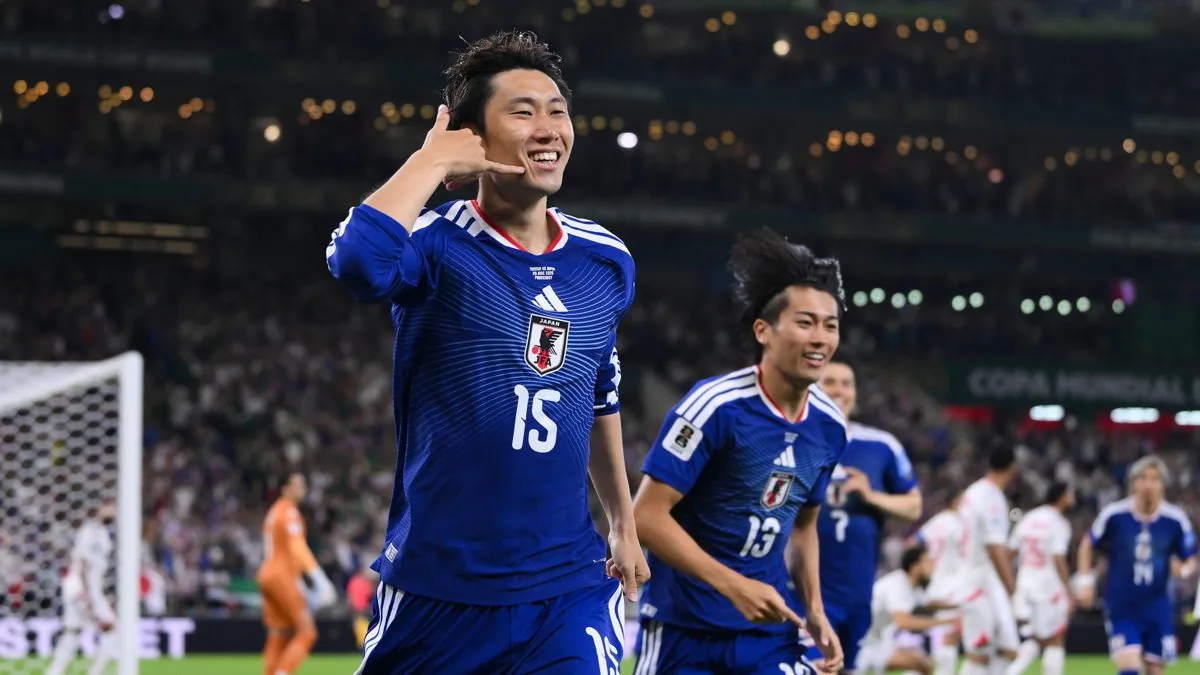

Group F Conclusion
Japan and Sweden have both advanced to the World Cup last 32 following a draw in their final Group F match in Dallas. The result ensured qualification for both nations, with Japan securing the runner-up position in the group. The match, played at Dallas Stadium in Arlington, saw moments of excitement after a subdued first half.
Before the match, Japan, with four points, needed a draw or a win to guarantee their progression. A loss would have made their qualification dependent on other results. Sweden, holding three points, faced a more complex situation, requiring a win to avoid relying on outcomes elsewhere.
The World Cup, which runs from June 11 to July 19, is co-hosted by the US, Canada, and Mexico. This tournament has expanded to include 48 participating nations, playing a total of 104 games. The group stage, where each team plays three others, concludes on June 27, with the top two teams from all 12 groups automatically qualifying for the knockout stages. Additionally, eight of the best third-place teams will also advance.
Match Highlights and Key Performances
The first half of the match was described as sterile by some observers, with little notable action until a shot from Keita Nakamura just before the whistle, which required a save from Sweden goalkeeper Jacob Widell Zetterström. However, the second half brought more intensity and two significant moments that determined the outcome for both teams.
Japan took the lead with a goal from Daizen Maeda, a forward who had been recalled for the match. His goal came from a well-executed play initiated by Ritsu Doan, the Eintracht Frankfurt winger. Doan received a return pass from Ayase Ueda, who had skillfully held the ball, and then delivered it to an alert Maeda, who finished precisely.
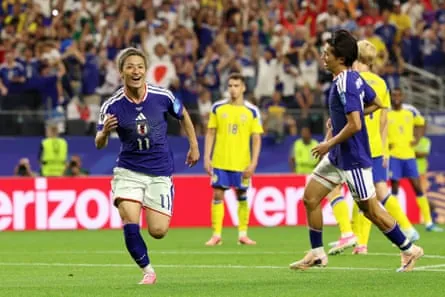
Sweden responded with a goal from Anthony Elanga, which ultimately sealed the draw. Elanga received the ball on the right side after Viktor Gyökeres had drawn Ao Tanaka away from the play. Elanga then cut inside and took a shot from an ambitious angle that curved past Zion Suzuki, the Japan goalkeeper, who appeared to see the ball late.
Sweden manager Graham Potter highlighted Gyökeres’s contribution, noting his performance as a centre-forward playing with his back to goal. Potter also made a surprise choice in goal, selecting Widell Zetterström, and included Elanga in the lineup following his goal-scoring performance against the Netherlands.
Looking Ahead to the Knockout Stages
With their qualification confirmed, Japan, as group runners-up, are set to face Brazil in Houston on Monday. Japan manager Hajime Moriyasu expressed excitement about this upcoming challenge, viewing it as proof of the growth in Japanese football. He referenced a previous victory against Carlo Ancelotti’s side in Tokyo, stating confidence in their ability to compete again. Moriyasu believes his team has shown they are not easily defeated.
Sweden’s path in the next round is less clear, as they await confirmation of their opponent, which could be Germany, France, or Norway. This uncertainty will influence Potter’s preparations for the upcoming matches. The knockout stage will begin with the first-ever Round of 32 at a FIFA World Cup on June 28, requiring the eventual champion to win five consecutive knockout games.
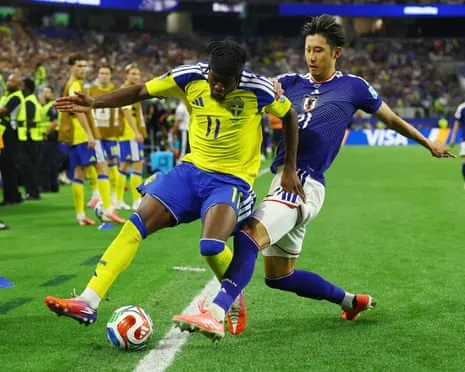
The draw allowed Sweden to recover from a previous 5-1 defeat to the Netherlands, a result that had followed an equally emphatic win against Tunisia. An early setback for Sweden in this match was an apparent hamstring injury to centre-back Isak Hien. Despite this, Sweden maintained stability until Japan increased their pressure.
The FIFA World Cup final is scheduled for July 19, with semi-finals on July 14 and July 15, and the third-place playoff on July 18.
Read Also
- South Africa secures first World Cup knockout stage berth with win over South Korea
- Ecuador secures knockout stage spot with victory over Germany in World Cup 2026
- Nottingham Forest midfielder Elliot Anderson set for Manchester City move
- Verstappen in preliminary talks with McLaren for potential Norris partnership
Source: theguardian.com

Harry Loxley is a Senior Football Correspondent at NewsGB.org. He spent his early career reporting East Midlands football. He focuses on the Premier League, the EFL and the England national side and is known for clear, deadline-driven reporting. He holds a degree in Sports Journalism from the University of Derby and completed an NCTJ diploma. Now based in Derby, he watches non-league and runs a fan podcast. “Good football writing follows the people, not just the points.”