
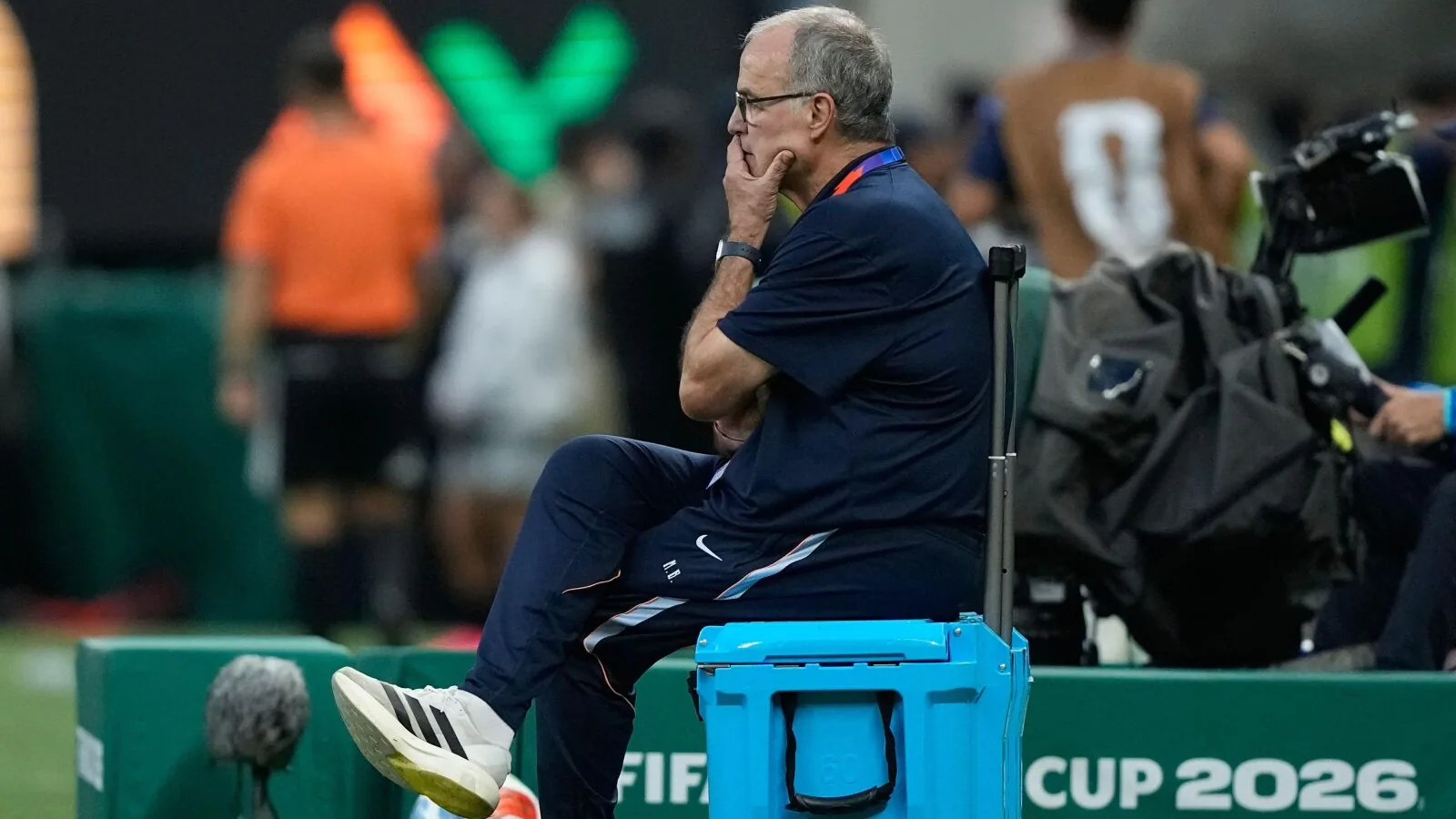

Uruguay’s World Cup exit and internal issues
Uruguay has exited the World Cup at the group stage for the second consecutive tournament, following a campaign marked by internal disagreements and individual errors. The team’s departure came after a 1-0 defeat to Spain, a result that sealed their fate after earlier draws against Cape Verde and Saudi Arabia. This outcome has led to the departure of manager Marcelo Bielsa.
The match against Spain saw a significant error from goalkeeper Fernando Muslera, who allowed a shot to pass through his grasp shortly before half-time, leading to Spain’s only goal. Muslera was subsequently replaced at half-time, a change he reportedly requested. This incident followed previous mistakes by Muslera in earlier matches, including errors leading to Cape Verde’s goals in a 2-2 draw.
The team’s performance against Spain was described as disjointed, with only one shot on target. The match concluded with Agustín Canobbio receiving a red card for a reckless challenge, adding to the sense of ill-discipline surrounding the team’s exit.
Managerial decisions and player dissent
Marcelo Bielsa’s tenure as manager concluded amidst acrimony. He accepted responsibility for the team’s performance, stating that journalists and fans legitimately want to blame him. He also acknowledged that his decision to keep faith with Muslera had backfired.
Reports indicate significant unrest within the Uruguayan camp. Four senior players—Sergio Rochet, Manuel Ugarte, Rodrigo Bentancur, and Federico Valverde—reportedly requested a meeting with Bielsa before the match against Spain. They raised concerns about the intensity of training, which they claimed led to injuries, and suggested a change in approach for the upcoming game, advocating for a low block defensive strategy and counter-attacking play.
Bielsa reportedly rejected these requests. During a team meeting that lasted 48 minutes, he explained his intention to mirror Spain’s playing style and justified his decision to bring injured but loyal players to the World Cup. He also accused the squad of attempting to remove him previously, referencing an incident involving Luis Suárez almost two years prior, and again when he excluded Nahitan Nández from the World Cup squad.
During this meeting, several players reportedly walked out after approximately 40 minutes of Bielsa’s address, despite attempts by defender José María Giménez to persuade them to stay. Ronald Araújo, who did not play in the first two games, reportedly commented on the mood, expressing a hope for advancement but also indicating that the situation could not be endured much longer.
Bielsa’s World Cup legacy
Bielsa’s record at World Cups has been described as poor. His Argentina team exited in the group stage of the 2002 World Cup. His Chile side reached the last 16 in 2010. This latest campaign with Uruguay saw them fail to defeat Saudi Arabia or Cape Verde, contributing to their early exit.
At 70 years old, it is considered unlikely that Bielsa will manage at a World Cup again. While he is recognised for his significant influence on tactical history, this tournament has been described as dreadful for both him and Uruguay.
Following the defeat to Spain, Bielsa also had a heated exchange with a reporter, telling them to “get on with it” after a pause in the interview. He maintained that the team deserved more points and that the goals conceded were avoidable.
Another notable decision by Bielsa during the match was the substitution of Federico Valverde after less than an hour, a move he explained was to add a more physical presence to the attack by bringing on Federico Viñas.
The team’s performance, coupled with the reported internal strife, has led to a disappointing end to Uruguay’s World Cup journey.
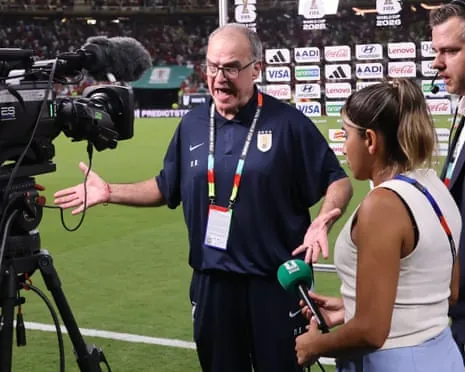
Bielsa stated that he is responsible for the disappointment and that his contribution to the country’s football fails to take root if results are not achieved.
Read Also
Source: theguardian.com

Niamh Pendlebury is the Sports Reporter at NewsGB.org, covering tennis, cricket and athletics with seven years of reporting experience. She reported on Team GB and the county circuit. She holds a degree in Sport and Media from the University of Central Lancashire and completed an NCTJ diploma. Based in Preston, she plays club tennis and follows road running. “The best interviews come from patience, not pressure.”